


Future of the Solar Industry in 2026: Key Trends and Predictions
A Changing Energy Landscape in 2026
The solar market outlook 2026 reflects a market that is still growing, but with less room for delays. In 2025, project teams had to adjust to changing qualification rules, sourcing expectations, and broader compliance requirements. Those changes made timing, planning, and execution more important across the renewable sector.
At the same time, solar and storage continued to lead new capacity growth. Developers are moving near-term projects forward where possible, especially those with clearer paths to construction and operation. That makes 2026 a year defined by speed, adaptability, and disciplined execution. Long-term planning still matters, but near-term delivery is becoming a bigger priority as schedules tighten and procurement becomes more complex.
Storage Integration Becomes Central to Solar Growth
One of the biggest solar industry trends for 2026 is the growing role of battery storage. Storage is increasingly being paired with solar to make projects more flexible, more reliable, and more valuable. Rising power demand is also increasing interest in energy resources that can deliver more controlled output.
Solar storage growth is being supported by lower battery costs and broader market demand. As costs come down, more developers are using storage not only for grid support, but also for energy arbitrage, capacity value, and hybrid project structures. As these systems grow in size and complexity, integrated design matters more. Racking, grounding, and wire management all need to support reliable performance and efficient installation as solar-plus-storage projects scale.
What Are the Pros and Cons of Ground-Mounted Solar Panels?
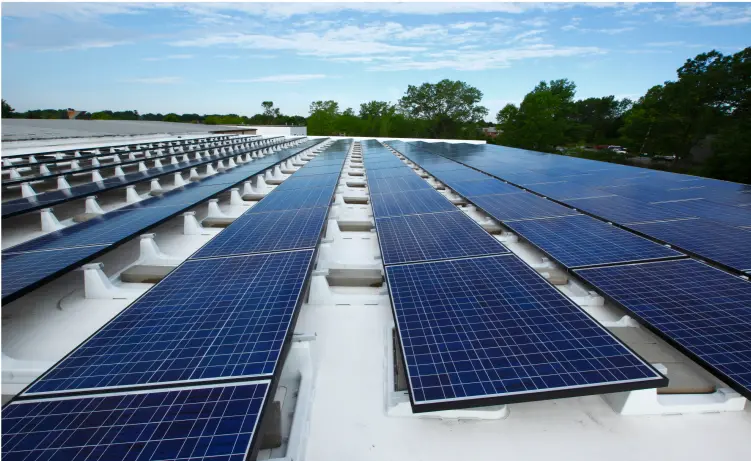
In 2026, one clear advantage of ground-mounted systems is that they can support larger commercial and utility-scale projects with more layout flexibility. They are often easier to optimize for orientation, spacing, and maintenance access. That makes them a strong fit for projects that need room for solar arrays, storage integration, and future expansion.
The downside is that large ground-mounted projects often face tighter development timelines and more pressure to move quickly into construction. Because of that, many developers are prioritizing mature assets and near-term pipelines over earlier-stage opportunities. Projects with strong offtake agreements, better site readiness, and clearer procurement plans are getting more attention. Teams are also accelerating construction where possible to protect eligibility windows and improve capital efficiency.
Digital tools are also becoming more important in this process. Developers and operators are using software and AI to improve predictive maintenance, weather forecasting, performance optimization, battery dispatch, workforce productivity, and deployment speed. In 2026, efficiency is becoming a key advantage. It is not just about building more projects. It is about building the right projects faster and operating them more effectively.
Strategic M&A and Platform Growth
Another part of the future of the solar industry is platform growth through acquisitions, partnerships, and co-investment structures. While some parts of the broader clean energy market saw slower investment activity in 2025, capital is still moving toward projects and platforms that offer long-term value.
That makes operating assets, hybrid solar-plus-storage portfolios, and experienced delivery teams more attractive heading into 2026. Investors want platforms that can move projects efficiently, manage risk, and support stable returns. Partnerships can also help firms share development risk, strengthen delivery capacity, and recycle capital into the next phase of growth. For solar installers, EPCs, and developers, this means execution strength is becoming just as important as pipeline size.
Supply Chain Agility and Resilience
Supply chain resilience remains one of the biggest renewable energy trends heading into 2026. Sourcing requirements, trade investigations, and tariff exposure are still affecting procurement decisions across the solar market. Battery and critical mineral supply chains remain a concern, especially as demand continues to grow.
Developers are responding by diversifying suppliers, strengthening procurement partnerships, stockpiling key components, and using digital tools to improve planning. Domestic manufacturing growth is also helping create more sourcing options. In 2026, supply chain flexibility will remain a major differentiator because it directly affects schedule certainty, cost control, and project confidence.
Positioning for the Next Phase of Solar Growth
The solar market outlook 2026 points to a sector that is still growing, but with a stronger focus on storage integration, capital efficiency, supply chain resilience, and disciplined project execution. For solar installers, EPCs, project engineers, and renewable developers, success will depend on building efficiently, staying compliant, and delivering dependable performance at scale.
As commercial solar projects grow more complex, the supporting infrastructure matters more. DynoRaxx provides performance-driven solar racking and grounding solutions built for commercial deployment.
Explore professional solar racking and grounding solutions at DynoRaxx.com.